

Why We’re Getting Ageing at Work Wrong — And What HR Can Do About It
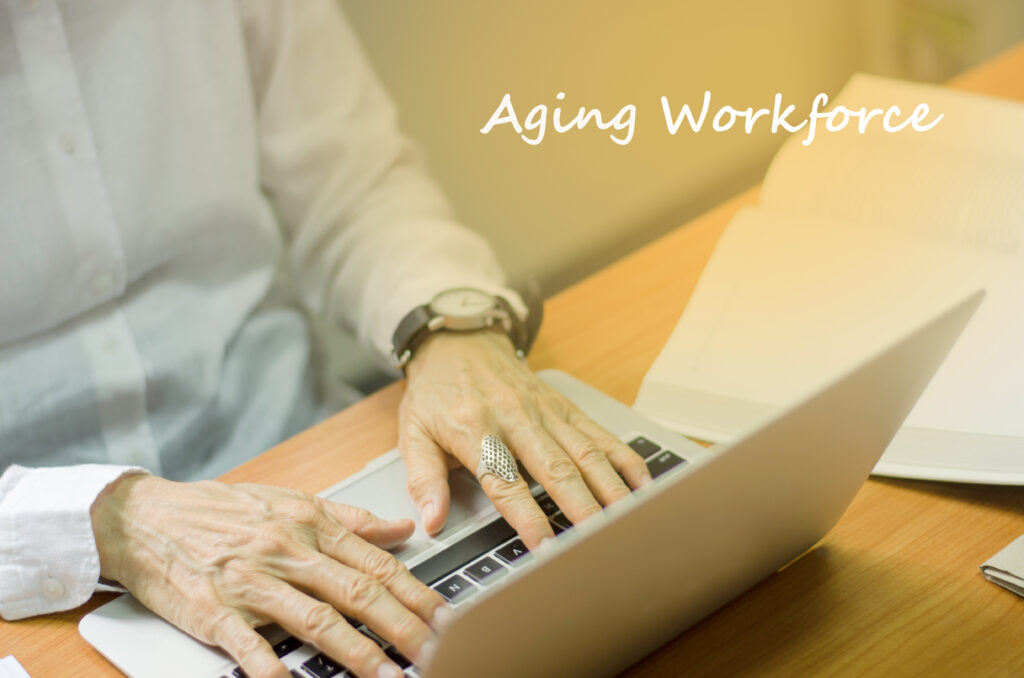
The global workforce is ageing — rapidly, irreversibly, and unevenly. In the UK, this shift is already reshaping labour markets, exposing skills shortages, and challenging long-held assumptions about productivity and performance.
But there’s a deeper issue hiding in plain sight.
For all the conversation about “skills gaps” and “reskilling older workers,” we may be solving the wrong problem.
Because ageing at work isn’t just a skills issue — it’s a capacity issue.
A mismatch in thinking
Global health frameworks, particularly those shaping the UN Decade of Healthy Ageing, define ageing not in terms of decline, but in terms of intrinsic capacity — the combination of five core domains:
- Mobility (physical function)
- Cognition (learning, memory, decision-making)
- Vitality (energy, resilience, metabolic health)
- Sensory (vision, hearing, perception)
- Psychological capacity (motivation, emotional stability, purpose)
Together, these determine a person’s functional ability — what they can actually do in the world.
Now compare that to how most organisations think about older workers.
The dominant narrative — reinforced by labour market data and employer strategies — focuses almost entirely on:
skills, reskilling, and employability
That maps neatly onto just the one domain: cognition.
The real gap
Here’s the uncomfortable truth:
Healthy ageing is about maintaining capacity across five domains — but workforce strategies are largely focused on maintaining skills in just one.
This creates a structural blind spot.
We’re asking older workers to stay productive, adaptable, and employable — while overlooking the broader set of capacities that actually enable them to do so.
And the consequences are already visible:
- Early workforce exit (often framed as “retirement choice”)
- Rising inactivity linked to health and wellbeing
- Underutilisation of experienced talent
- Persistent skills shortages despite available workers
It’s not just about individuals
To be clear, this isn’t about shifting responsibility onto older workers.
In fact, the opposite is true.
The evidence shows that while expectations on individuals are rising (reskill, stay healthy, stay relevant), organisational systems have not kept pace:
- Few employers have a clear age strategy
- Access to training declines with age
- Jobs are rarely redesigned for changing capacity
- Wellbeing initiatives often overlook mid-to-late career needs
In other words:
We’re expecting people to maintain capacity in environments that weren’t designed to support it.
A better way to think about ageing at work
If we take intrinsic capacity seriously, it changes the conversation.
Instead of asking:
“How do we keep older workers skilled?”
We start asking:
“How do we sustain the full range of capacities that enable people to contribute over time?”
That shift opens up a much richer — and more effective — approach to workforce strategy.
Five practical ways HR can support the value of ageing workers
1. Move beyond “skills” to a whole-capacity mindset
Skills matter — but they’re only part of the picture.
Start recognising and designing for:
- physical capability
- energy and stamina
- emotional resilience
- sensory needs
This doesn’t mean overhauling everything overnight — it means broadening how you define “ability at work.”
2. Redesign jobs, not just people
Too often, the solution to ageing is framed as:
“the worker needs to adapt”
But the most effective organisations ask:
“how can the job adapt too?”
Examples:
- flexible scheduling to support energy levels
- task redesign to reduce physical strain
- hybrid roles that leverage experience over intensity
Job design is one of the most underused tools in managing an ageing workforce.
3. Make learning truly lifelong
Many organisations say they support lifelong learning — but data consistently shows older workers receive less training.
Practical shifts:
- remove age bias in development opportunities
- tailor learning formats (time, pace, delivery)
- focus on confidence and application, not just content
Reskilling only works if access is equitable.
4. Treat wellbeing as a performance strategy
Wellbeing is often positioned as a benefit.
For an ageing workforce, it’s a core enabler of capacity — particularly vitality and psychological resilience.
Think beyond generic programmes:
- proactive health support (not just reactive absence management)
- support for managing long-term conditions
- creating roles that are sustainable, not just productive
Sustainable performance requires sustained capacity.
5. Build an age-inclusive culture — deliberately
Many of the barriers older workers face are cultural, not structural.
Common issues:
- assumptions about adaptability
- overlooked contributions
- limited progression opportunities
HR can actively counter this by:
- promoting intergenerational working
- valuing experience alongside innovation
- challenging age bias in hiring and development
Inclusion isn’t just about fairness — it’s about unlocking value.
Final thought
The workforce is ageing. That much is clear.
What’s less clear is whether organisations are evolving fast enough to respond.
Right now, most are still treating ageing as a skills problem.
But the evidence suggests something more fundamental:
The labour market has not yet caught up with the full intrinsic capacity model — it is still treating ageing primarily as a skills issue rather than a whole-person capacity challenge.
Until that changes, we risk continuing to lose talent we can’t afford to lose — not because people can’t contribute, but because we haven’t created the conditions that allow them to.