

The DOES of Happiness: Small Actions, Big Impact
Chasing Happiness
As a coach, I often meet people who are searching for happiness as though it is a destination to be reached. Yet the science of well-being suggests something different. Happiness is often less about what happens to us and more about the habits and behaviours we practise every day.
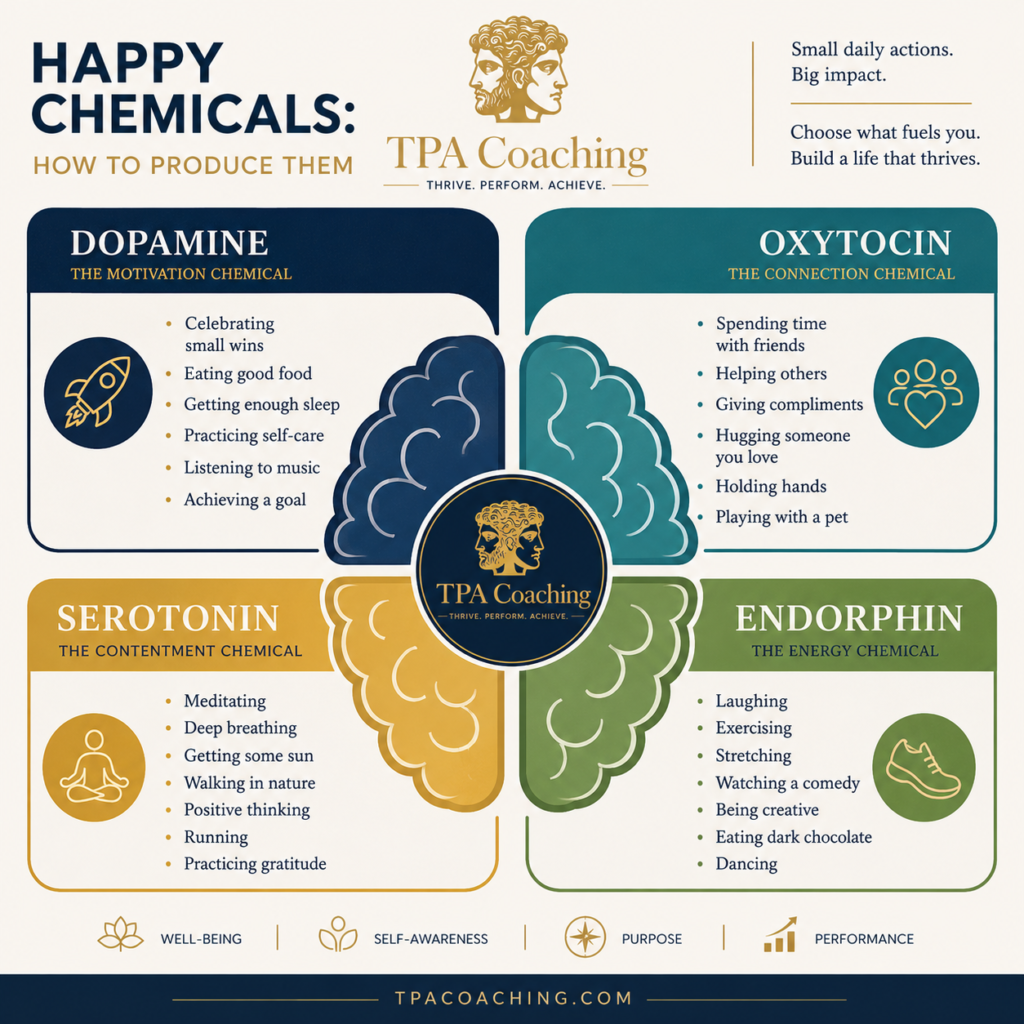
One simple way to understand this is through the DOES model—an easy-to-remember framework based on four key neurochemicals that influence our mood, motivation, relationships, and resilience:
D – Dopamine
O – Oxytocin
E – Endorphins
S – Serotonin
While happiness is far more complex than chemistry alone, these four systems help explain why certain activities consistently improve our sense of well-being.
D – Dopamine: The Motivation Chemical
Dopamine is associated with anticipation, achievement, and progress. It is the reason ticking something off a to-do list feels satisfying.
You can support healthy dopamine levels by:
- Celebrating small wins
- Setting meaningful goals
- Learning something new
- Practising self-care
- Getting sufficient sleep
This aligns closely with what I see in coaching. Many people become trapped by focusing on distant outcomes while overlooking the power of small, meaningful steps. Progress creates momentum.
O – Oxytocin: The Connection Chemical
Oxytocin is often called the “bonding hormone” because it is linked to trust, relationships, and feelings of belonging.
It is stimulated through:
- Spending time with people you care about
- Acts of kindness
- Helping others
- Giving genuine compliments
- Physical connection and affection
Within my work on male well-being and midlife transition, one of the most common challenges I encounter is social isolation. We are not designed to flourish alone. Human connection remains one of the most powerful contributors to long-term well-being.
E – Endorphins: The Energy Chemical
Endorphins are the body’s natural pain relievers and mood enhancers.
They can be increased through:
- Exercise
- Walking
- Stretching
- Laughter
- Creativity
- Enjoyable physical activity
This links directly to the growing field of Physical Intelligence, which recognises that the body is not simply a vehicle carrying the mind. Our physical state profoundly influences our emotional and psychological well-being.
S – Serotonin: The Contentment Chemical
Serotonin is associated with calmness, confidence, and emotional stability.
Activities that support serotonin include:
- Spending time outdoors
- Exposure to natural daylight
- Meditation and mindfulness
- Deep breathing
- Gratitude practices
- Walking in nature
When life becomes busy and demanding, these are often the first practices people abandon. Ironically, they are often the very things that help us regain perspective and resilience.
Beyond Happiness: Towards Flourishing
The DOES model offers a useful reminder that happiness is not something we simply wait for. It is something we actively cultivate through daily choices.
However, within my emerging work on Human Flourishing Architecture, I believe happiness is only part of the story. True flourishing extends beyond feeling good today. It involves creating a life characterised by:
- Positive emotions
- Meaning and purpose
- Strong relationships
- Physical vitality
- Engagement and growth
- Accomplishment
- Character strengths
In other words, happiness may be the spark, but flourishing is the fire.
Perhaps the question is not “How can I be happier?” but rather:
“What small action can I take today that helps me flourish tomorrow?”